- Eggbun's Newsletter
- Posts
- Eggbun Newsletter!
Eggbun Newsletter!
🫧보글보글 VS 부글부글, Postive vowel & Negative vowel🔥

Eggbun Education
April 01, 2024
🫧 보글보글 😶🌫️ VS 🔥 부글부글 😡
Positive vowels(양성모음) & Negative vowel(음성모음)
Korean consists of 19 consonants and 21 vowels. These consonants and vowels can be further classified according to various criteria. Consonants are divided into 평음 plain, 격음 aspirated, and 경음 tense sounds, distinguishing between ㄱ, ㄲ, ㅋ / ㄷ, ㄸ, ㅌ, while vowels are divided into single and double vowels, distinguishing between ㅏ and ㅑ, for example.
Among these various criteria, there is a method of dividing vowels based on the feeling they convey. This method categorizes vowels into 양성모음(positive vowels) and 음성모음(negative vowels). Although one might not think that the feeling of vowels is important, there are many examples where positive and negative vowels are used than expected.
First, let's take a look at what positive and negative vowels are and what they're made of.
양성모음(Positive vowels) are bright and refreshing in feeling. They include ㅏ, ㅗ, ㅑ, ㅛ, ㅘ, ㅚ, ㅐ.
음성모음(Negative vowels) are dark and have a larger sound. They include ㅓ, ㅜ, ㅕ, ㅠ, ㅔ, ㅝ, ㅟ, ㅖ.
Positive vowels tend to combine with other positive vowels, and negative vowels tend to combine with other negative vowels. This is called 'vowel harmony.'
When we study grammar rules like '-아/어' in constructions like '아요/어요' or '아서/어서', if the stem vowel is ㅏ or ㅗ, we learn that '아' is attached, and if it's any other vowel, '어' is attached. This is also a form of vowel harmony phenomenon, as both ㅏ and ㅗ are positive vowels, hence they combine with '아', also a positive vowel.
In Korean, positive vowels are primarily used to convey a bright and cheerful feeling, while negative vowels are used to express a darker feeling or deeper emotions.
You can observe this in onomatopoeia and mimetic words.
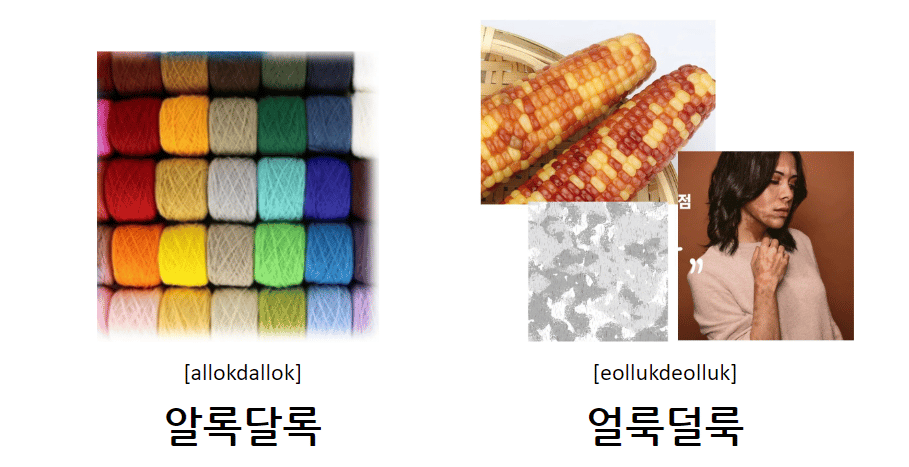
1. 알록달록 VS 얼룩덜룩
They appear a combination of many colors.
알록달록 is a word made up of positive vowels. And it refers to a combination of many bright colors. It can be translated as ‘colorful’ and ‘particolored’.
얼룩덜룩 is a combination of many dark colors. It's translated as 'mottled', dappled. The word '얼룩' is also used on its own to mean 'stain, soiled marks'.
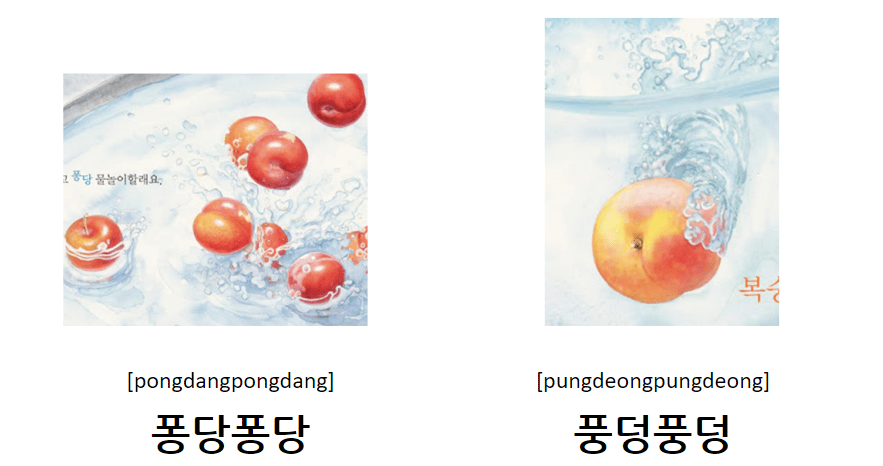
2. 퐁당퐁당 VS 풍덩풍덩
They appear the sound made when something falls into the water.
퐁당퐁당 is the light sound when a small and hard object falls into the water.
풍덩풍덩 is the heavy sound when a large and heavy object falls into deep water.
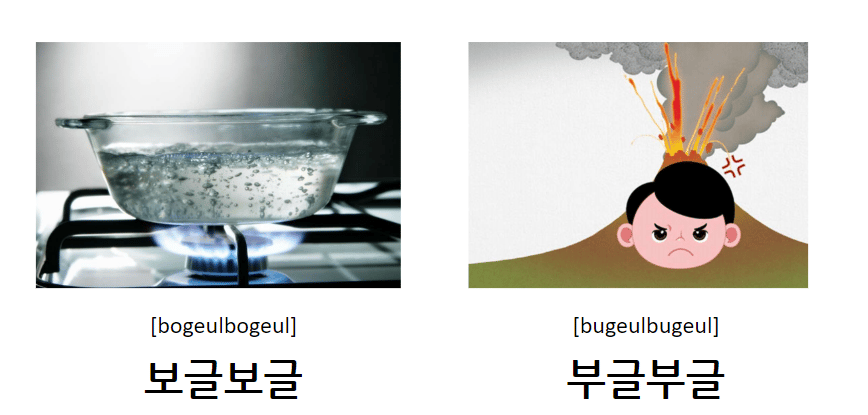
3. 보글보글 VS 부글부글
It’s the sound and shape of water boiling or bubbling.
보글보글 is the sound or shape of a small amount of liquid boiling or small bubbles.
부글부글 is the sound or shape of a large amount of liquid boiling or large bubbles. Also, it shows the appearance of being upset and disturbed.
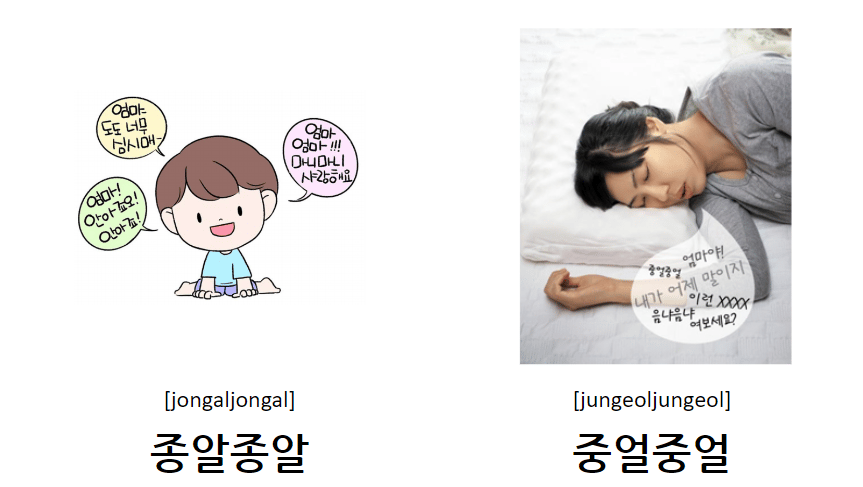
4. 종알종알 VS 중얼중얼
They are the sound of talking to yourself in a low voice - babblingly, pratingly, muttering, blah blah.
종알종알 is the sound usually of women and children talking to themselves in low voices. It has a lovely, cute feel to it.
중얼중얼 is the sound you make when talking to yourself with a small voice alone. It's an expression might use when talking in sleep or complaining to himself.
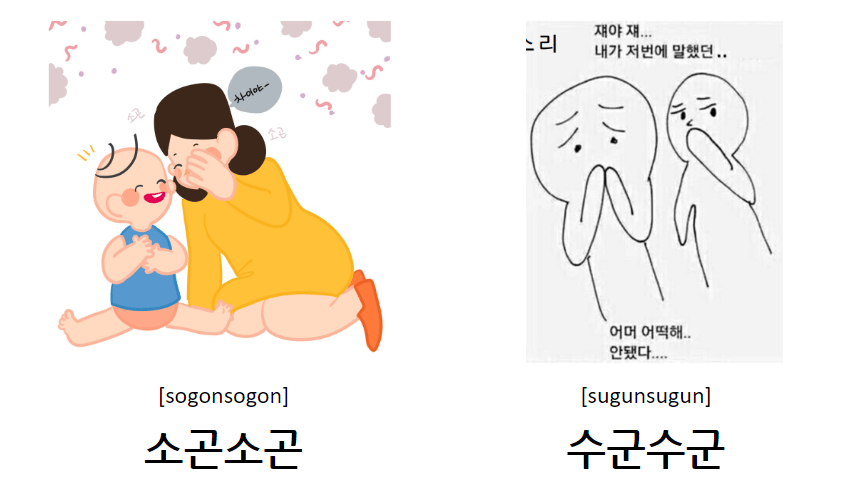
5. 소곤소곤 VS 수군수군
They are the sound of talking in a low voice that others cannot listen to - in whispers, in an undertone, secretly.
소근소근 is the cute sound like when a child talks about secrets.
수근수근 is the sound when people talk others secret dissatisfaction, swearing.
🎞️ Learn Korean through webtoons with Eggbun! 🎞️
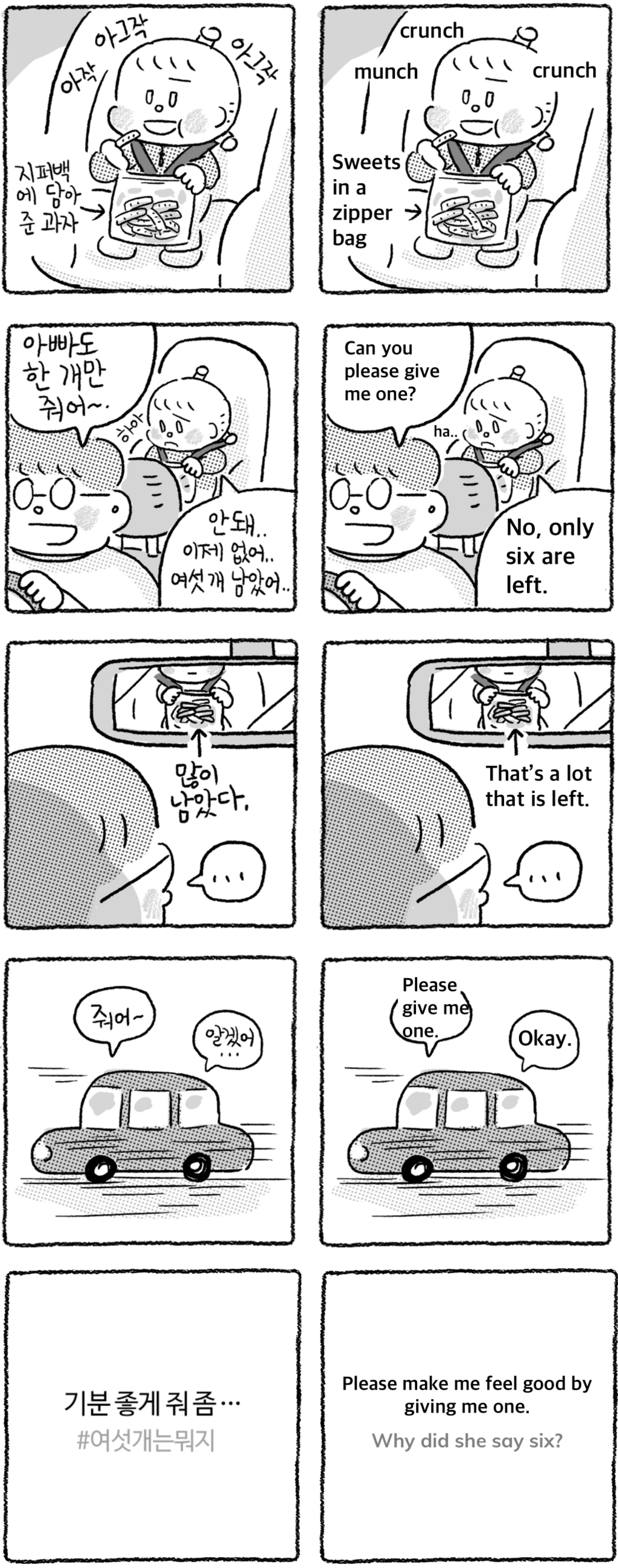
아빠는 N살 (Dad is N years old)
N years since I’ve become a dad, N years living as a dad.
EP. 하나만 줘. Please give me one.
|
|